Marrakech
Wednesday, January 21, 2026 — Matrakech, Morocco
Even before we landed at the airport yesterday, we were amazed by the sight of the snow-covered Atlas Mountains. Wow, I had no idea they were so prominent from Marrakech. Apparently, we had just missed many days of rain, which had blanketed them in snow.
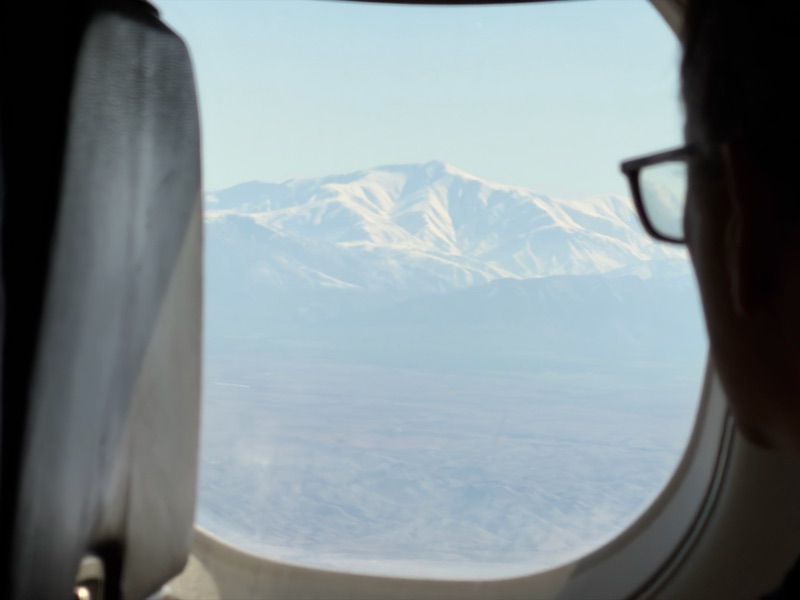 |
| First view of the Atlas Mountains |
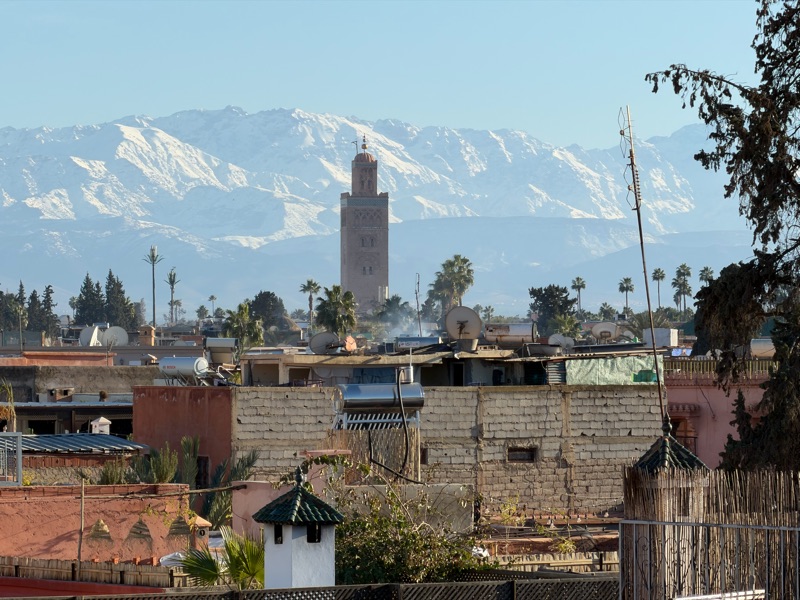 |
| View from the roof of our Riad |
Of all the countries we've been to, Morocco reminds me most of India and Nepal -- bustling, somewhat chaotic, the smell of smoke, spices, incense, and exhaust. Buildings, sidewalks, and streets are not completely finished, dirt piled up here and there, stacks of bricks on street corners. It's a bit unclear whether this is just the way it is or if stuff is actually being repaired.
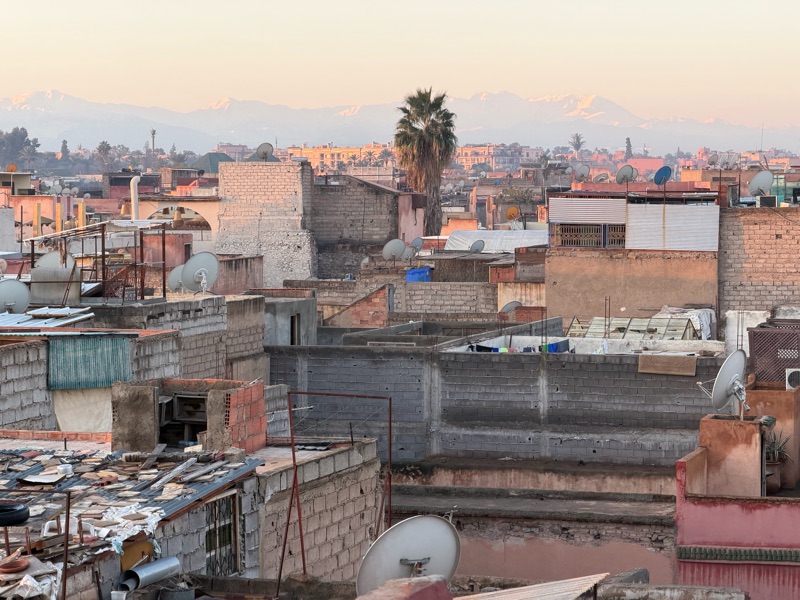 |
| Another view from the roof |
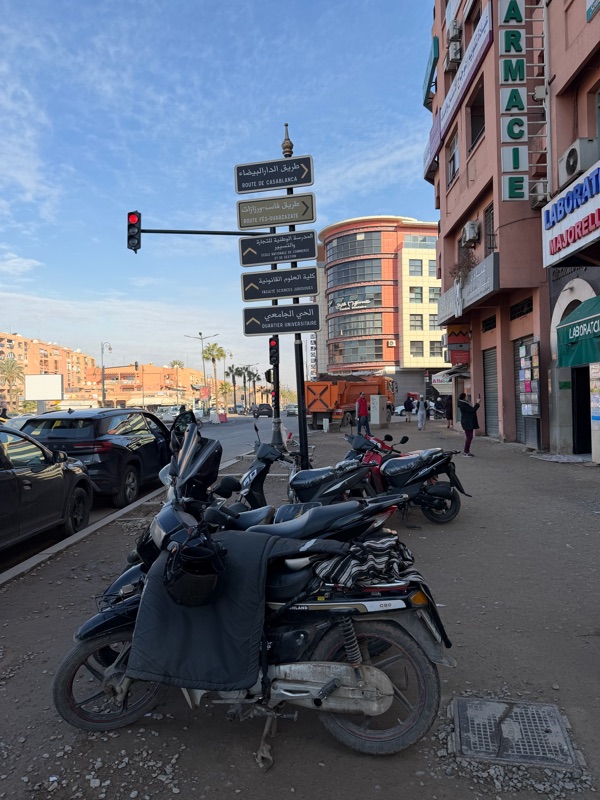 |
| Downtown Marrakech |
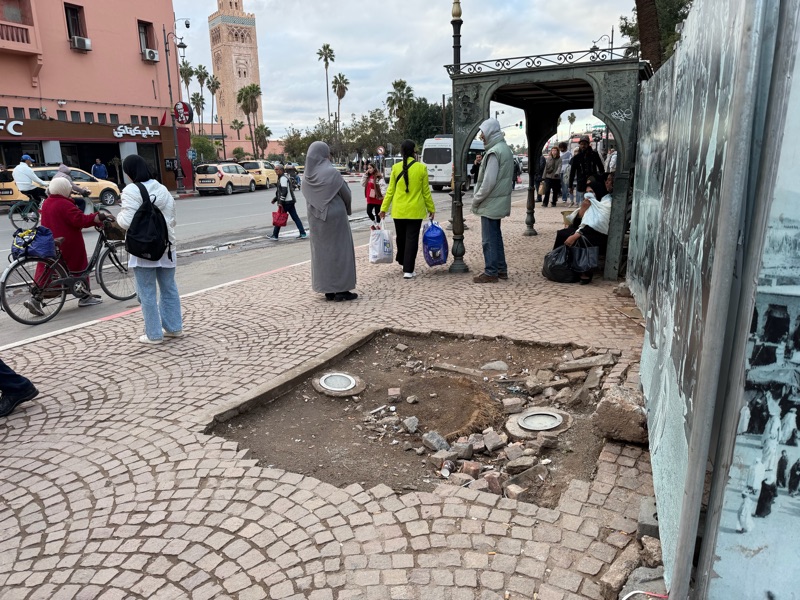
The Medina — the old, walled portion of the city with its labyrinth of narrow, brick-paved alleyways — is where we are staying at Riad Lamya. Riads are old, ornate, family homes or compounds, which are now often used as guest houses. They typically have a center courtyard, perhaps with a fountain or small pool, and lots of intricate tile and woodwork with floral and geometric designs.
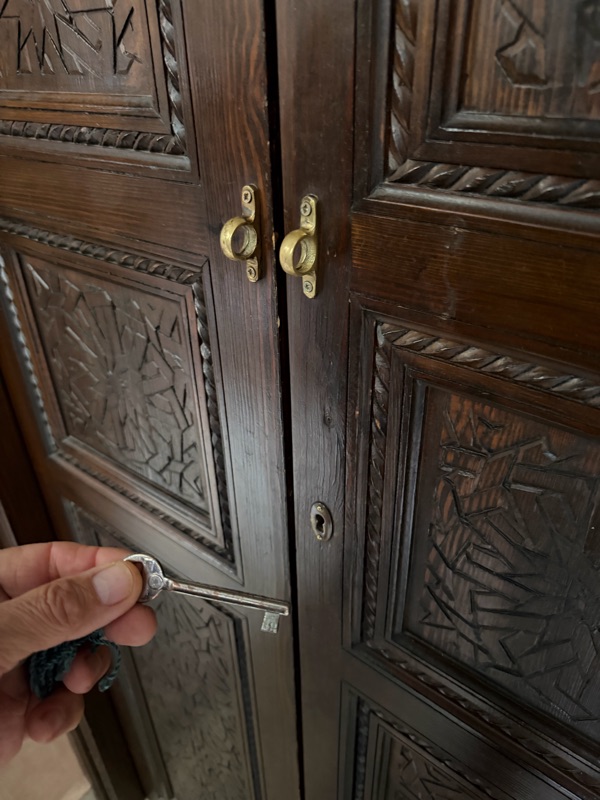 |
| Room key |
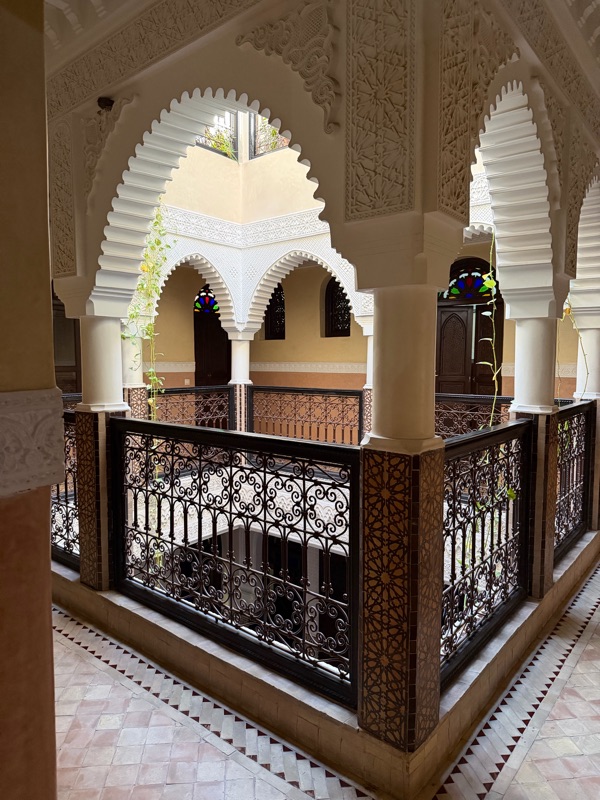 |
| Above the courtyard |
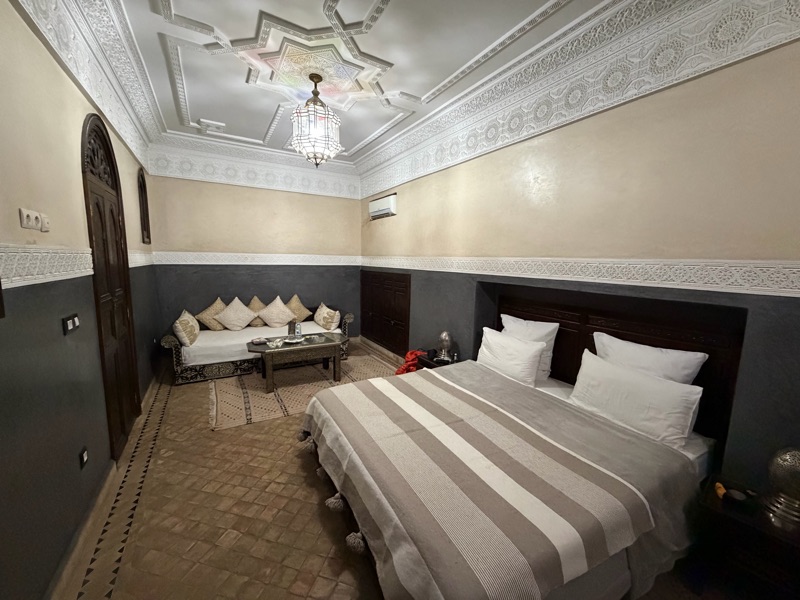 |
| Our room |
I've read that the walled medinas make up some of the largest car-free zones of any city. This might imply a relatively peaceful and pleasant environment. However, there are enough mopeds buzzing about, spewing exhaust, weaving in and around people, animals, and vendor carts, that it’s anything but.
 |
| Watch out |
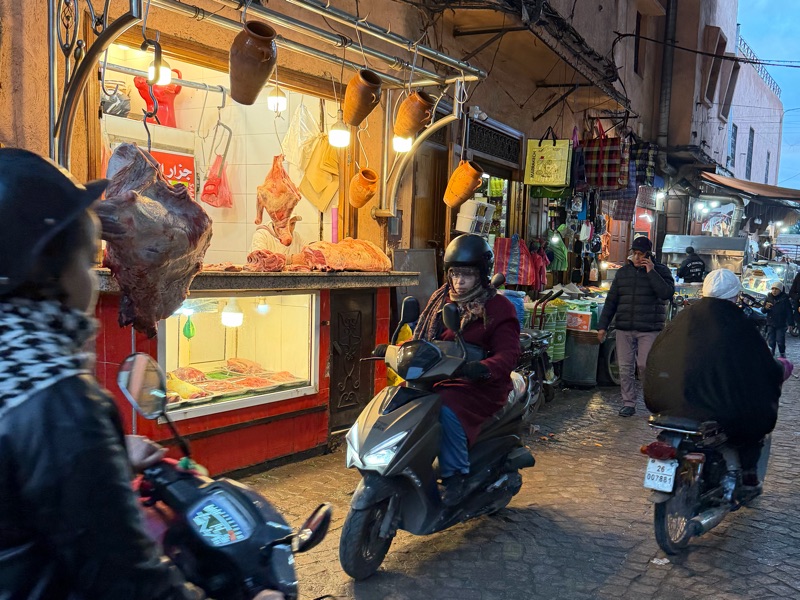 |
| Too many mopeds |
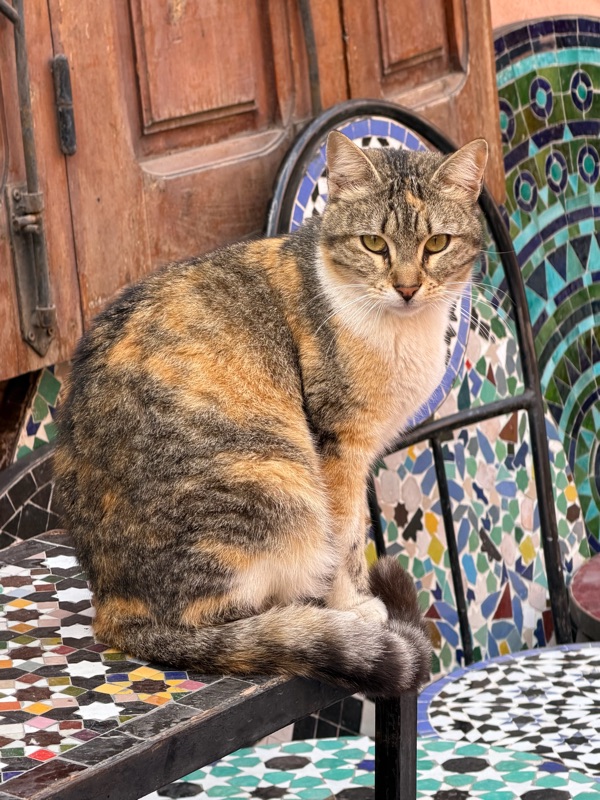
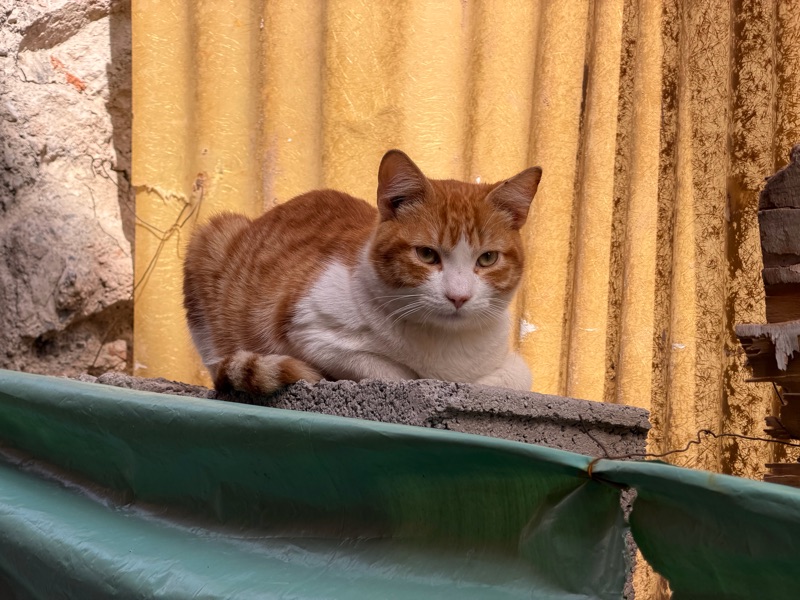
Cats, however, seem to tolerate the activity incredibly well. They are small, agile, and mostly stay in the doorways, side streets, or the remains of old walls.
Last night, after dinner and walking around the Jemaa el Fnaa -- the big outdoor square and night market -- we were making our way through the maze of streets back to our place when a kid stopped to help us.
Apparently, we wouldn't be able to go through at the end of the street because all the shops were closing, which was true enough. They were going to lock the gate. He would just quickly let us out to avoid backtracking. We followed, though, after an unexpectedly number of twists and turns, he suddenly stopped and suggested a small payment would be in order. Surely this would be no trouble as he had just helped us out and, besides, we were wearing nice jackets. Slow on the uptake, it was then pretty clear that the goal was simply to disorient us and convince us we’d be stuck. (Of course, in the light of day, it was obvious that there were no gates to block off any of the alleyways, although it seemed plausible at the time.) We patted our pockets for money and Meg eventually offered a 20 dirham note, to which he and a friend, who had just shown up, expressed their shock at such a paltry sum. True, 20 dirham is only ~$2.20, although a good lunch at a tourist cafe overlooking the square can be had for 30! But, affordability was hardly the issue. To Meg's dismay, I abruptly turned and began retracing our route, expecting she would follow. She did, a few seconds later... and they did not. Suffice it to say, we did find our way home and ran into no locked gates.
[Meg’s note: I’m not sure dismay is the proper description. My senses were on high alert as our “guide” seemed to be leading us to darker and narrower alleyways. When the second teenager showed up and started fussing over the amount, I really wasn’t sure what was going to happen. Once they saw Dean take off, they seemed content with the amount. I was then forced to follow on my own with the two boys behind, until I shortly caught up. It was scary and I felt frightened. This was an unusual circumstance that I hope to not to repeat.]
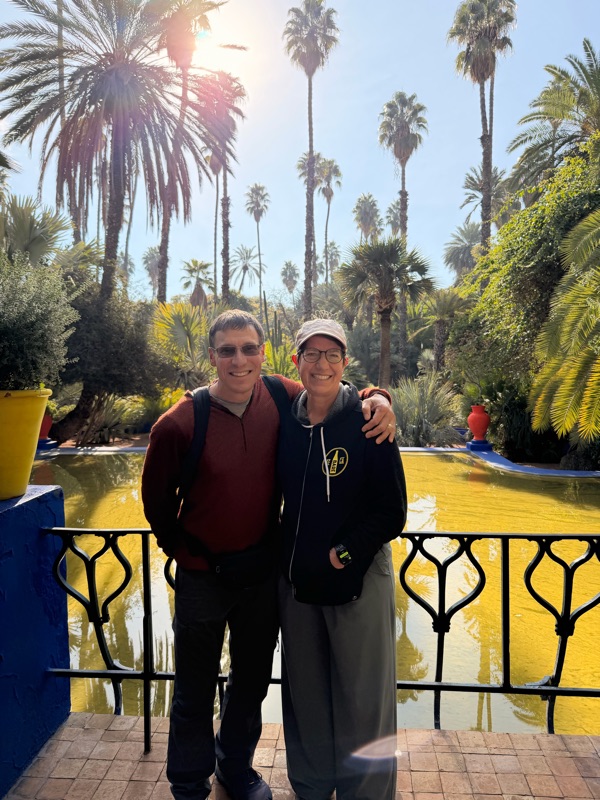
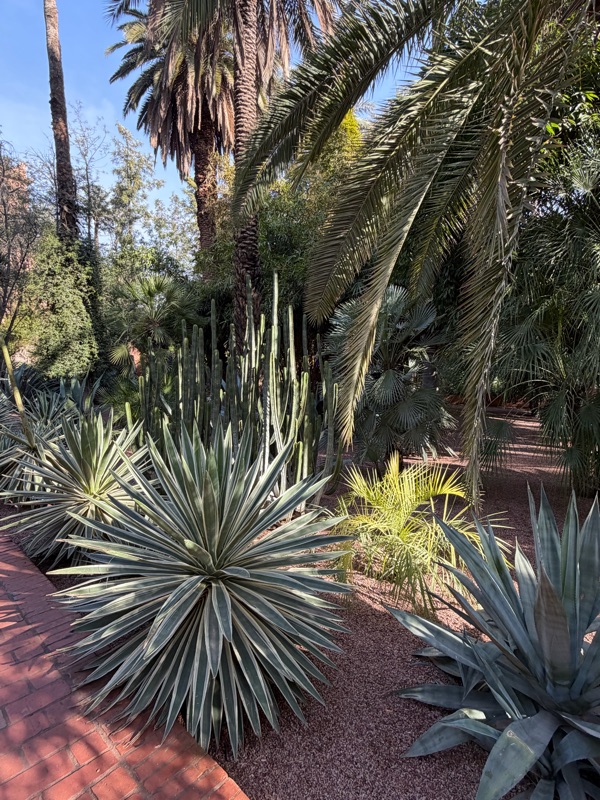
Today we did a few touristy things: the Jardin Majorelle -- a small, well-maintained palm, succulent, and cactus garden purchased and preserved by Yves Saint Laurent.
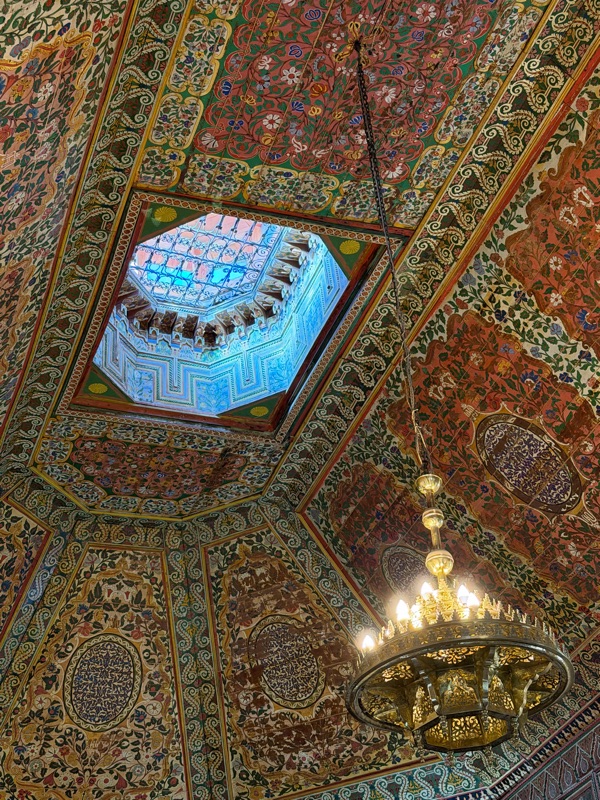
… and also the Bahia Palace, built in the 1860s and expanded by Grand Vizier Abu Ahmed for his four wives and 24 concubines! Lots of intricate tile, wood, and plaster work.
The more interesting excursion, however, was visiting the Marrakech tanneries at the edge of the medina, which are traditional outdoor clay pits still used to soak cow, camel, sheep, and goat skins in lye and ammonia for cleaning and hair removal -- a messy and very smelly process.
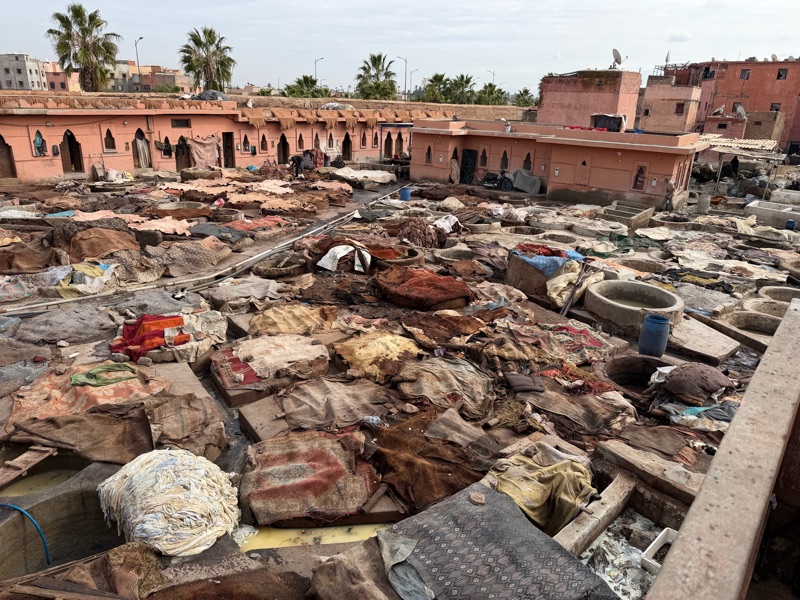 |
| Tannery clay pits |
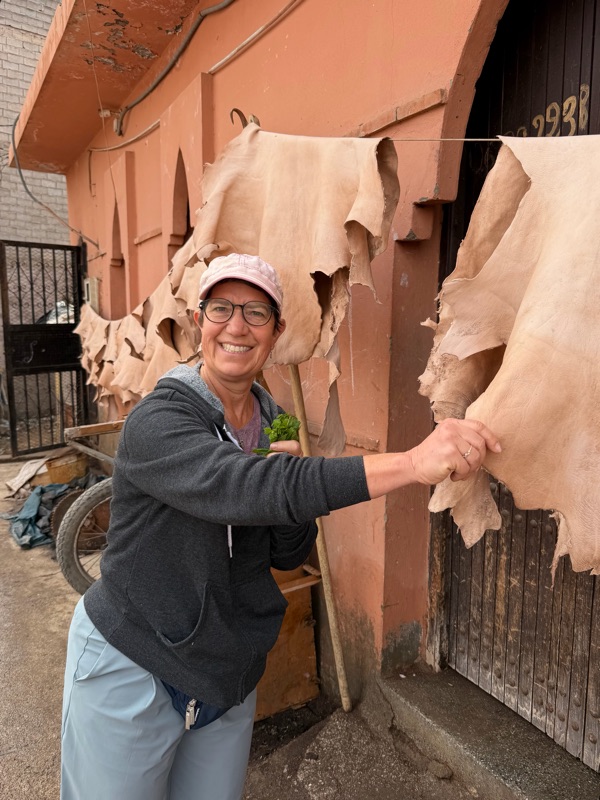
We were not too surprised when, after our short tour, we were led to a shop of very nice leather goods, jackets, belts, backpacks... It was a surprise, though, when we were shown to a room full of handmade Berber carpets. We were not particularly in need of a carpet, but before we knew it, there were ten different carpets laid out before us. The shop owner was incredibly charming, and was convinced we would be shocked by the (low) price. When he was finally ready to talk money, he typed some numbers into a desktop calculator... and there were four of them... in dollars. One - seven - five - zero... $1750. I was indeed shocked! But no need for alarm, we were all friends. He just needed to know what I would be willing to pay, but when I said $200, he was clearly offended. These were high-quality, hand-made carpets that we could never buy for this price in the US! He was a little confused, however. Two hundred dollars had nothing to do with what I thought the carpets were actually worth. We already have a perfectly good, cheap, mass produced carpet under the coffee table in the living room. But he seemed to think that we were interested in replacing it with a much better one.
Nevertheless, he had clearly conducted this elaborate presentation hundreds of times before. And, at some level, I suspect we felt obligated to buy something. In the end, we (Meg) bought a very nice leather purse for only a hundred bucks!
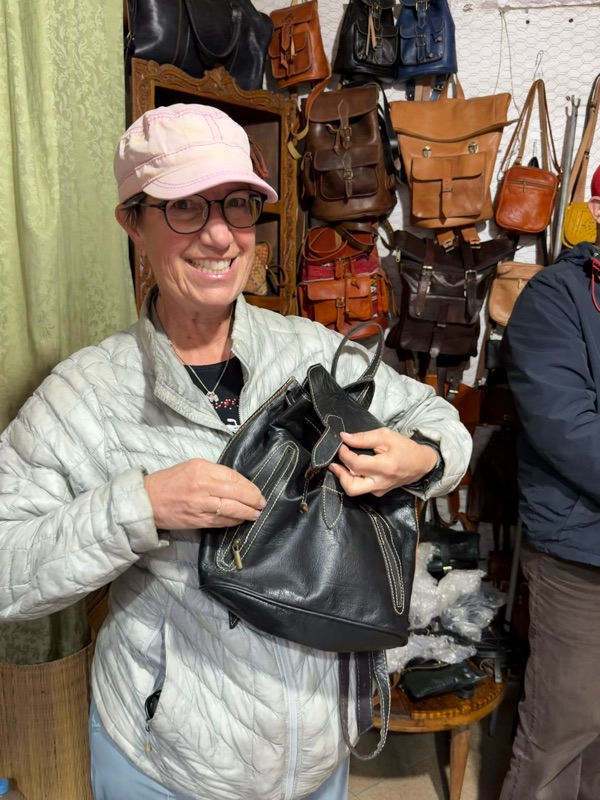 |
| Happy shopper |


Comments
Post a Comment